Ms. Rezvan's Success Story
Ms. R.H., 58 years old, who in Farvardin 1400 (March–April 2021) was diagnosed with type 2 diabetes, joined the Ketonia medical commission on 15 Azar 1401 (December 2022); the patient's history was as follows:
- Several years ago, an ultrasound diagnosed grade 1 fatty liver.
- She has hypothyroidism and takes half a tablet of levothyroxine sodium 0.1 in the mornings.
- She has celiac disease and follows a gluten-free diet; she does not consume wheat products. The diagnosis was made by biopsy around 2009 (1388). Following the diet was hard at first, but she has been eating gluten-free bread for some time now.
- The blood sugar she measures at home is mostly above 200.
- She takes glibenclamide 5: two tablets in the morning and one at night.
- She constantly feels lethargic, even right after waking up.
- She is somewhat polydipsic (excessively thirsty) and polyuric (frequent urination).
- Most of the time she has burning and pain in the soles of her feet.
- She takes alprazolam. Her sleep is generally poor: she goes to bed late, usually wakes up in the afternoon, and for that reason her main meal is dinner, where she eats a lot — mostly rice-based dishes.
- Systolic blood pressure is usually 130 mmHg.
- The patient's medications at the start of treatment:
- Alprazolam 0.5 — two tablets at night
- Cinnarizine 25 — two tablets in the morning, one at night
- Olanzapine — one tablet daily
- Buspirone 5 — half in the morning, half at night
- Ginkgotide — one tablet at night
- Glibenclamide 5 — two tablets in the morning, one at night
- Levothyroxine sodium 0.1 — half a tablet in the morning
- Folic acid — one tablet daily
- Calcium — one tablet daily
- Biotin supplement
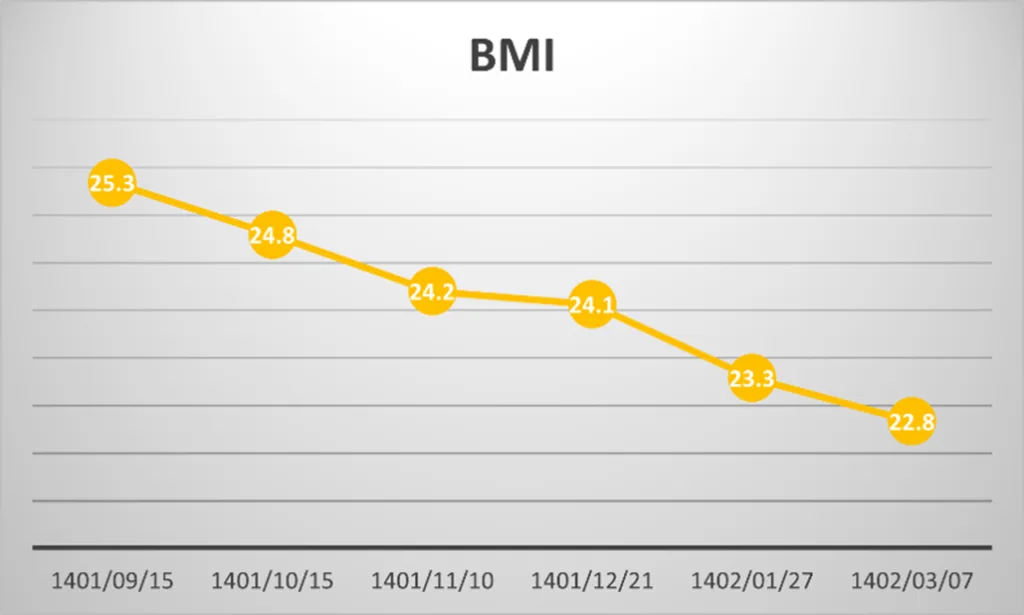
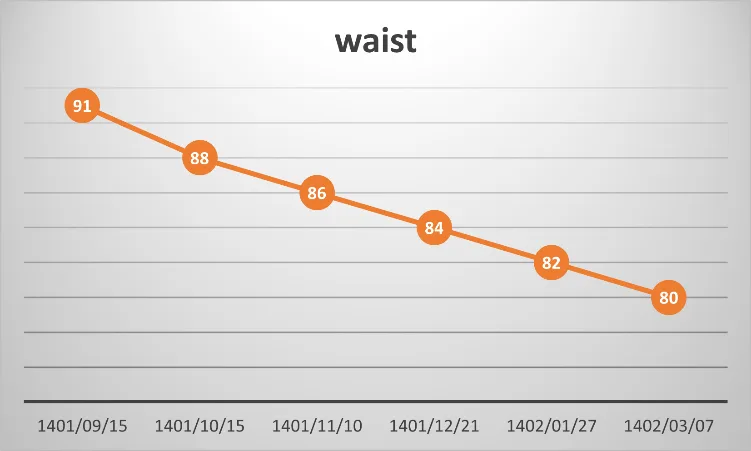
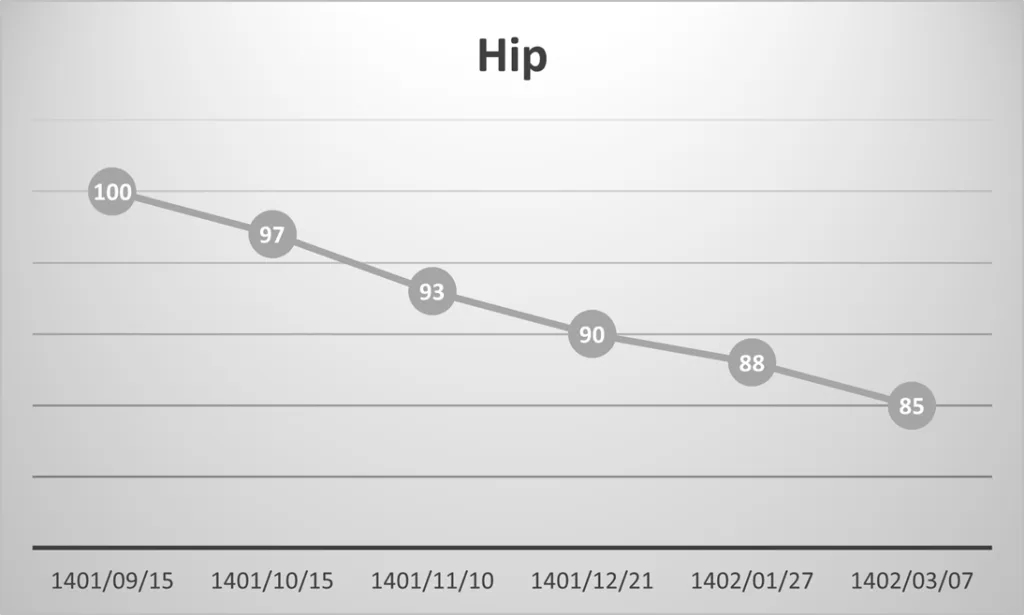
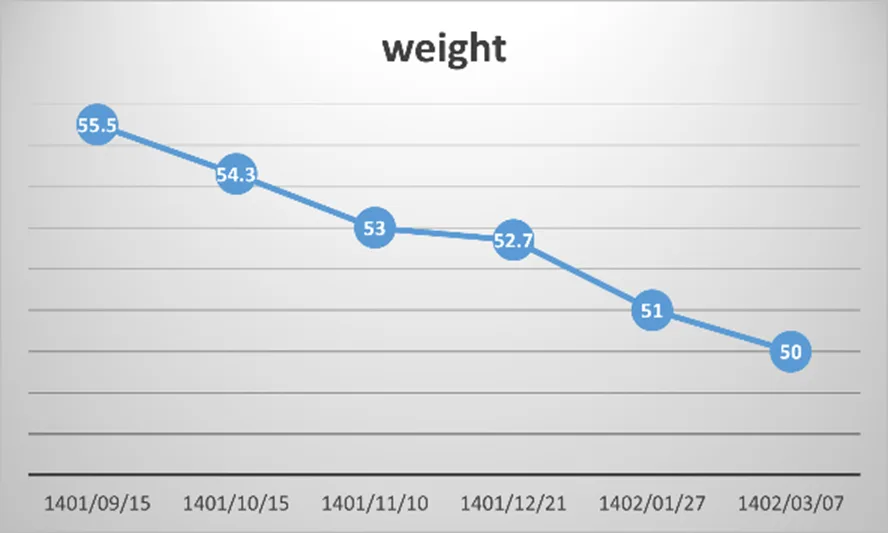
At the commission, her weight was recorded as 55.5 kg, height 148 cm, BMI 25.3, waist 91 cm, and hip 100 cm.
The result of Ketonia's initial commission was announced to the patient as follows:
Our main intervention is lifestyle correction; various aspects of your lifestyle — especially nutrition and sleep — need correcting. Misconceptions will also be corrected; it is best not to resist that.
Your blood sugar is currently at the stage that requires insulin injections. However, since insulin creates a vicious cycle, we prefer to avoid reaching that stage..
We need blood tests to update the lipid and glucose profile and determine the state of the hypothyroidism.
With the explanations given at the Ketonia medical commission, the patient was very interested in joining the Ketonia program. The Ketonia team therefore began its training and programs for correcting the patient's lifestyle (nutrition, sleep, exercise, mental health, and medical care) right away.
In addition, the following goals were set for her:
- Improving insulin resistance
- Increasing energy and morale
- Improving the burning and pain in her feet
- Controlling and lowering blood sugar while correcting and reducing her diabetes medication
- Correcting food intake and sleep status
- Setting a diet suitable for her celiac condition, diabetes, and lipid profile
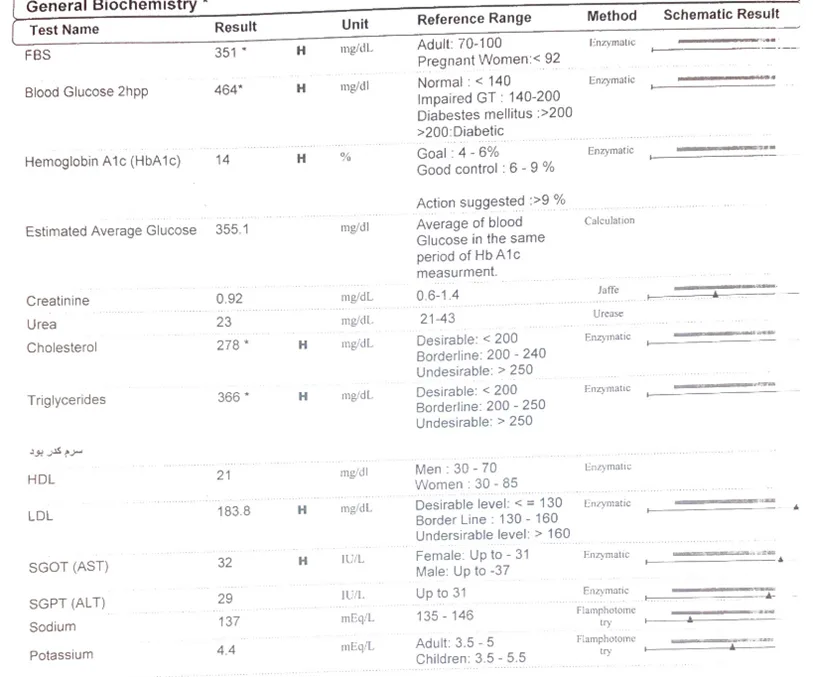
In the blood test of 04-10-1401 (December 2022), the patient's
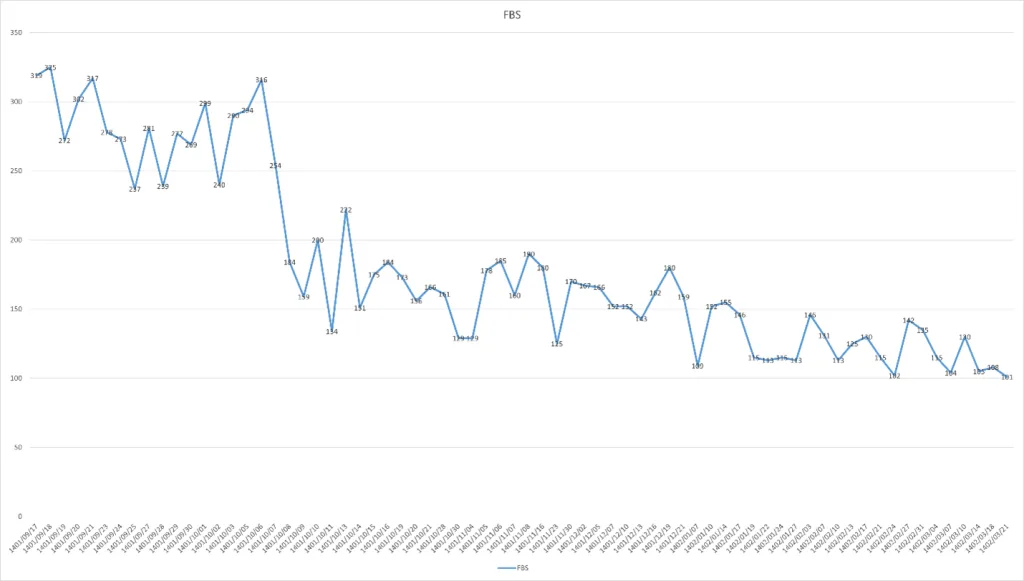
- fasting glucose was 351
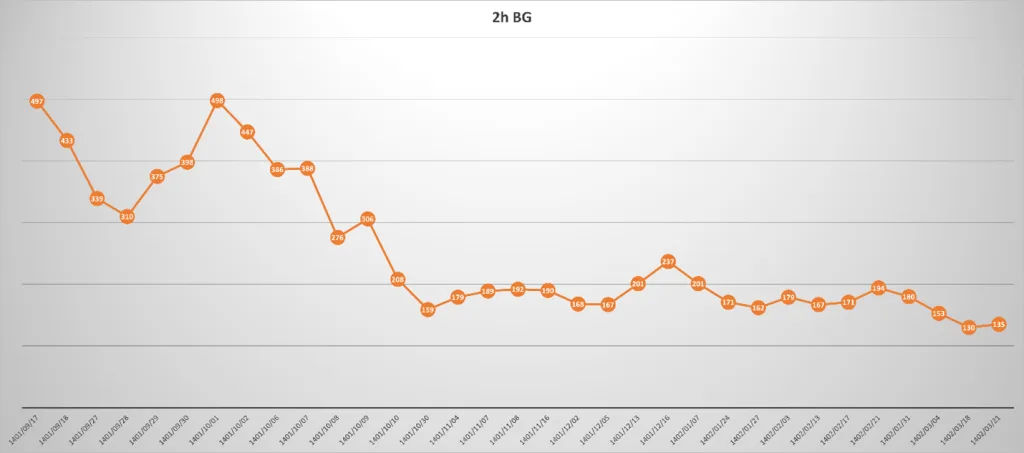
- average fasting glucose 355, 2-hour glucose 464, hemoglobin A1c (HbA1C) 14, total cholesterol 278, HDL cholesterol 21, LDL cholesterol 184, triglycerides 366, ALT 29, AST 32
- Insulin: 7
- Vitamin D: 30
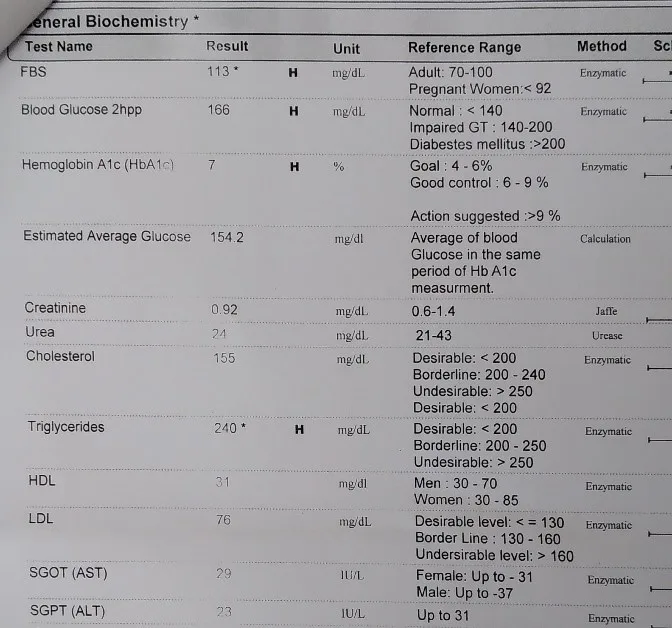
After about 25 weeks of treatment and the Ketonia team's lifestyle training, in the blood test of 27-03-1402 (March 2023)
- fasting glucose was 113 (a 298-point decrease)
- average fasting glucose 154 (a 201-point decrease)
- 2-hour glucose 166 (a 298-point decrease)
- Hemoglobin A1c (HbA1C) 7 (a 7-point decrease)
- Total cholesterol 155 (a 123-point decrease)
- HDL cholesterol 31 (a 10-point improvement)
- cholesterol LDL: 76 (a 108-point decrease)
- Triglycerides 240 (a 126-point decrease)
- ALT: 23 (a 6-point decrease)
- AST: 29 (a 3-point decrease)
- Vitamin D: 65 (a 35-point improvement)
- Insulin: 5.4
- Weight 50 (a 5.5 kg decrease)
- Body mass index (BMI): 22.8 (a 2.5-point decrease)
- Waist 80 (an 11 cm decrease)
- Hip 85 (a 15 cm decrease)
were recorded for the patient, indicating significant changes in her laboratory and anthropometric indicators.
The patient's current medications:
- Alprazolam 0.5 — two tablets at night
- Cinnarizine 25 — two tablets in the morning, one at night
- Olanzapine — one tablet daily
- Buspirone 5 — half in the morning, half at night
- Ginkgotide — one tablet at night
- Zipmet 50/1000 — one tablet every 12 hours, morning and night
- Empagliflozin 25 — one tablet at night
- Levothyroxine sodium 0.1 — half a tablet in the morning
- Folic acid — one tablet daily
- Calcium — one tablet daily
- Biotin supplement
- According to the survey, the patient stated that the Ketonia team's training has given her — beyond nutrition — very good sleep quality and quantity, energy, and motivation. Her foot pain has completely resolved; she now walks 30 minutes daily and does 20 minutes of anaerobic exercise in the evening.
- She also said she considers the new results and the positive changes in herself nothing short of a miracle, and that she never thought the day would come when she would regain this good state and good blood sugar control.
- She attributes these brilliant results to the Ketonia medical team's training and follow-up, together with her own perseverance and her family's strong support.
- The patient is now following the Ketonia program and, with the team's support, has improved her health — especially her metabolic syndrome, diabetes, blood pressure, and fatty liver — experienced a 5.5 kg weight loss, and at the same time received a diet suited to her condition and her celiac disease. With improvements in her laboratory and anthropometric indicators, she has succeeded in controlling her diabetes and metabolic syndrome through lifestyle and nutrition correction, and has been spared many of the complications of high blood sugar and the likelihood of insulin injections. With the training, she has also achieved excellent sleep quality, improved her physical activity level, and turned a healthy lifestyle into a habit and part of her personality.
Diabetes is the most common endocrine disease: more than 150 million people worldwide and close to 3 million people in Iran are affected, and a considerable number of cases remain undiagnosed. Based on available data, the prevalence of diabetes is estimated to reach 300 million by 2025. Considering the mortality and disability caused by its chronic complications and its enormous economic burden, this disease is a major health problem. As in other developing countries, the prevalence of diabetes in Iran is rising. Lifestyle and nutrition correction therefore appears to be the best and least costly way to prevent and treat diabetes. That is why the Ketonia team aims, through lifestyle and nutrition education tailored to each person's way of life, to take an important step in helping patients with diabetes and metabolic syndrome.